Maiden tower Baku
Back to all places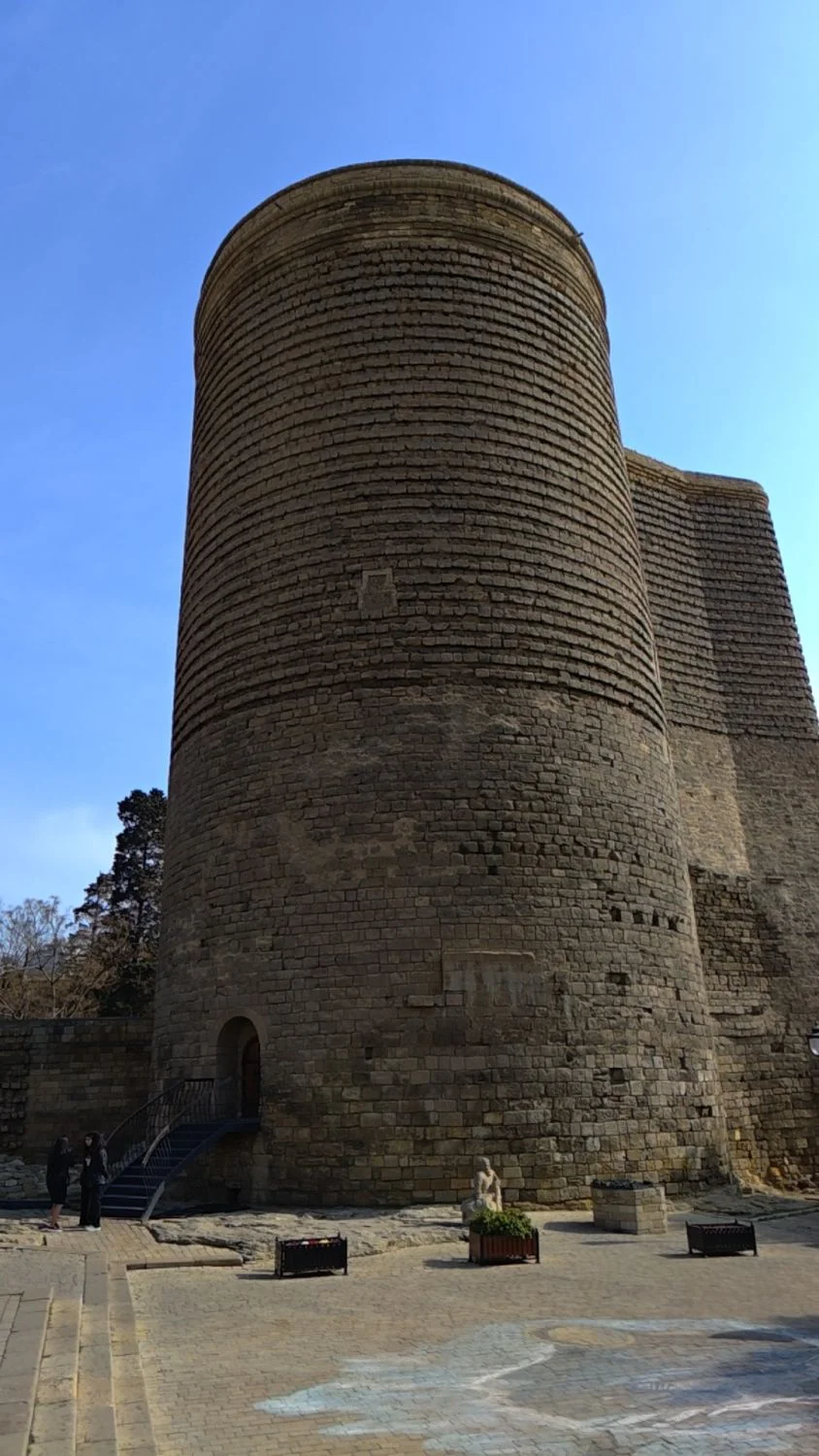
Maiden tower Baku
0:00 / 2:26Maiden tower Baku
Maiden Tower, an iconic 12th-century edifice located in the heart of Baku’s Old City, is a blend of historical architecture and compelling legends.
This UNESCO World Heritage Site, along with Shirvanshahs’ Palace, epitomizes the cultural and historical ethos of Azerbaijan, making it a treasured national emblem depicted on Azerbaijani currency and official documents.
The tower houses a museum showcasing the evolution of Baku and features a gift shop. Visitors to the tower can enjoy a panoramic view from its top, encompassing the ancient cityscape, Baku Boulevard, and expansive views of the Baku Bay.
The area surrounding the tower, once submerged beneath the Caspian Sea, began to emerge between the 9th and 15th centuries. During this time, the city walls and the grand bastion of Maiden Tower were erected, adding to the fortification of the Old City.
Maiden Tower is not just an architectural marvel; it is shrouded in mystery and folklore. The well-known ballet "Maiden Tower," created by Afrasiyab Badalbeyli in 1940 and later reenacted in 1999, draws its inspiration from the tower’s mystical aura.
Legends suggest that the tower was originally a Zoroastrian fire temple, possibly dating back to the 7th or 8th century BC. This aligns with theories that propose the tower’s use as an astronomical observatory, given its strategic openings and alignments which correlate to significant astronomical events.
Further adding to the enigma, the tower is associated with numerous legends, one of which tells of a fiery-haired maiden who, imbued with supernatural powers from the Holy Fire, defended the city from invaders, ultimately leading to her tragic demise. Her sacrifice saved the city and in her honor, the tower was named Maiden Tower.
Architecturally, the tower is a feat of ancient engineering, constructed to withstand earthquakes and harsh climatic conditions. Its cylindrical structure, with walls thickening towards the base, was instrumental in its durability. Inside, the tower is ascended via a staircase abutting the circular wall, with narrow openings allowing for light and air, characteristics typical of defensive structures of the period.
A recent restoration attempt, prompted by an earthquake in 2000 and subsequent UNESCO concerns about the site’s preservation, led to significant conservation efforts.
40.36613, 49.83714